
Week of 2026-06-19
On Our Liturgy and the Good Order of the Church
Dear Parishioners,
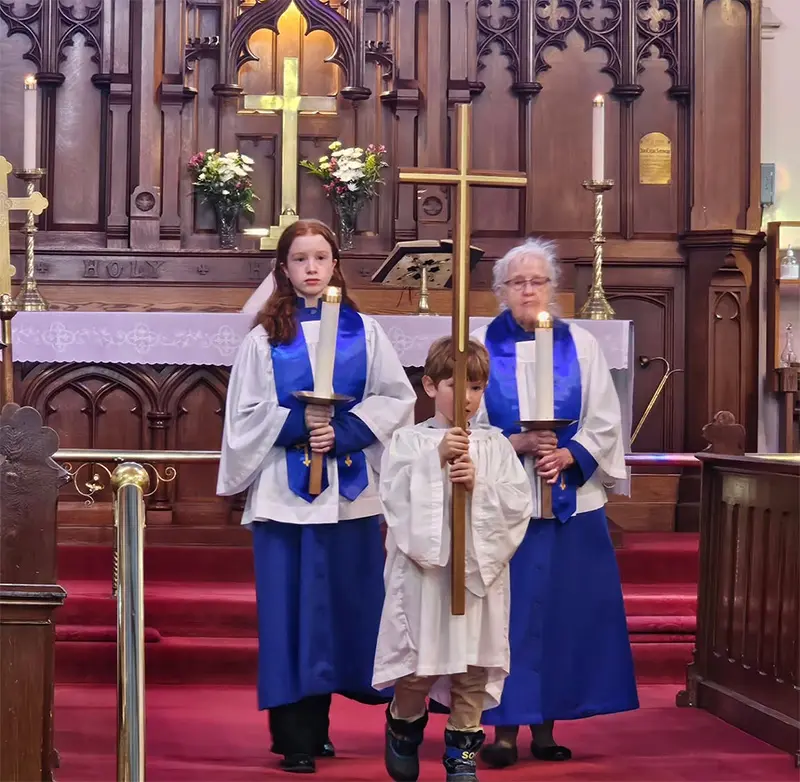
During last Sunday's celebration, something occurred that caught my attention from a liturgical perspective. As our crucifer proceeded to the back of the church in preparation for the entrance procession, the entire congregation stood while he walked to his position. While this was undoubtedly well-intentioned, it does not correspond to the liturgical practice of the Anglican tradition and is not part of the guidelines followed by our parish.
As Rector of the Parish, I feel a responsibility to clarify that this action was not planned by me, was not discussed with me, and does not have my support. I make this clarification because several people have approached me in recent days expressing questions and concerns regarding certain practices and initiatives that have arisen without proper discernment and pastoral guidance.
I wish to reaffirm, with humility and respect, what was already shared at our Parish Advisory Council (PAC) meeting: any change or innovation related to the liturgical space and the public worship of the Church must be undertaken only with the guidance and approval of the Rector of the Parish. This is not a matter of personal preference, but of the responsibility entrusted to me by the Church to safeguard good order, discipline, and faithfulness to our Anglican tradition.
I must admit that situations such as this have been a source of concern and weariness. Therefore, I ask everyone, with affection and sincerity, to work together in a spirit of unity, mutual respect, and obedience to the liturgical norms we have received from our Diocese. My commitment remains the same as the one I publicly made in my vows of ordination and institution: to remain faithful to the doctrine, worship, and discipline of the Anglican Church of Canada, following the guidance of our Bishop William—neither more nor less than what the Church asks of us.
To those who have shown encouragement and support, I offer my heartfelt thanks. I also ask you to remain calm. Everything will be well. By God's grace, we will continue to walk together, serving Christ and strengthening the fellowship of our faith community.
Finally, I would like to share the following article explaining the meaning and appropriate times for sitting, standing, and kneeling during the Holy Eucharist in the Anglican tradition. These guidelines reflect the liturgical practice followed in our parish. If there are any questions regarding any aspect of our liturgy, or if anyone has ideas for new practices or innovations, I kindly ask that you speak with me before any such initiative is implemented.
Gestures in Anglican Worship: Sitting, Standing, and Kneeling
In the Anglican tradition, bodily gestures during worship are not merely external actions but visible expressions of our faith and reverence before God. Sitting, standing, and kneeling help the congregation participate fully in the liturgy, engaging body, mind, and spirit in worship.
Sitting is generally a posture of listening and reflection. The congregation remains seated during readings, sermons, and other moments of instruction, demonstrating attentiveness to God's Word and a willingness to learn.
Standing is an expression of honor, joy, and respect. We typically stand for hymns, the proclamation of the Gospel, the recitation of the Creeds, and the principal prayers of the Church. By standing, we demonstrate our readiness to respond to God's call and our unity as the Body of Christ.
Kneeling is a traditional gesture of humility, penitence, and devotion. We often kneel during the Confession, the Prayers of the People, and during the celebration of Holy Communion. This posture symbolizes our dependence upon God's grace and our reverence in His presence.
Although practices may vary somewhat between parishes and dioceses, these gestures share the common purpose of enriching the worship experience. They remind us that we worship God not only with our words, but with our whole being, offering Him our hearts, minds, and bodies.
"Glorify God in your body." (1 Corinthians 6:20)
Finally, following the guidance of our Diocesan Bishop, I strongly encourage those who were unable to participate in our Book Study to read To Love and Serve. This book provides an excellent introduction to the faith, history, and practice of the Anglican tradition and helps clarify many questions that may arise. It is a valuable resource for anyone wishing to deepen their understanding of the life, worship, and mission of the Anglican Church.
May God bless each one of you and our entire parish community, so that with love, humility, and faithfulness we may continue to serve Jesus Christ, who is the Way, the Truth, and the Life.